

Never have we seen so much activity, energy and enthusiasm in our auto retail space. If you thought the market was on some type of cooling off period, you are flat out wrong! Here in Q1 of 2026, this has never been more evident that the game is not only on, it is very big. A record-setting wave of dealership transactions continues to flood the market as mergers and acquisitions drive major changes in the industry.
Let’s get this story off to a good start by looking at some numbers which are a truly breathtaking sight. According to a report, Auto Dealership Buy-Sell Q1 of 2026 from Kerrigan Advisors, the number of transactions is up an extraordinary 21% compared to the same period in the prior year. In the past twelve months ending March of 2026, the market completed an incredible 478 transactions, its highest in a trailing 12 month period and a astounding 114% above the pre-pandemic norm. Haig Partners, the leading dealership merger and acquisition advisory firm in the industry released their Q1 2026 report today confirming that the market continues at breakneck speed, reporting that they estimate that dealership acquisition volume reached 139 dealership rooftops sold during the period, an increase of 39% over Q1 2025, driven largely by dealers continuing belief that the franchise model offers tremendous value.

What is most striking about the current buying frenzy at dealership groups is that it is being fueled by private acquirers, by a landslide. Independently held dealerships represented virtually all or 95.7 percent of the sales completed by the group sector in the second quarter, indicating entrepreneurs are incredibly enthusiastic about adding auto stores. It shouldn’t surprise people because this isn’t passive, passive investment activity but the same kind of owners we’ve always seen at the head of an expanding retail chain wanting to run business after business. In the second quarter of this year privately owned groups snapped up 31 dealerships, compared with just a little over one on the behalf of larger public groups.
Buyer Landscape Insights:
The juxtaposition between private transaction volume and public company valuations reflects a competitive and balanced, yet fluid, market; as privately held buyers push activity, publicly traded entities are providing market valuations with their hefty transaction amounts, contributing both market liquidity and prices. But the data simultaneously illustrates that multiple levels of confidence are now buoying the market. Confidence in the market has become apparent at both individual, entrepreneur-driven levels and that of large, corporate entities alike and the result has been a fiercely competitive, busy market wherein numerous private buyers and public companies will shape the nature of dealership consolidation.

The magnitude and scope of dealership transactions are also skyrocketing, with a steep increase in multi-store transactions across the board. Buyers are less focused on the “single store” deal, increasingly setting their sights on “group deals” to expand their presence across a particular region or state.
Scale Expansion Indicators:
The larger transactions also highlight the changes going in the industry as more businesses move out of their standard operating models. What they have learned is scale gives businesses an edge against competitors in a less than favorable economic climate. By acquiring several at once, businesses are able to make their businesses leaner, keep more expenses in line, and put in the place the stronger branding needed to continue to be able to make good profits going forward, dealers say.

With more multi-dealership transactions being made than at any other time, the financial outlay of each acquisition has also set some serious records. Major publicly traded dealership group are injecting record dollars, shelling out approximately $200 million on an average dealership acquisition. Case in point, Penske Automotive group snapped up a pair of luxury Lexus dealerships in Winter Park and Orlando,Fla in deal said to be about $646 million. Such large acquisition values mean that a premier brand in an affluent area can command a high premium due to lucrative profitability.
High Value Deal Trends:
These large acquisitions are transforming not only how the dealership landscape itself looks from a valuation perspective but also the multiples paid in M&A deals now and in the future. Buyers see an opportunity in assets that have the stability, power, and future potential, and for them, there’s a price for that stability. The message that every dealership isn’t necessarily valued in the same way continues to reverberate throughout the M&A landscape, with prime assets continuing to trade at higher and higher multiples over and above those of less fortunate performers, the chasm widens.

Even though we saw a spike in acquisition activity, dealer profitability has taken a pause. We’ve seen the average earnings decrease anywhere from 15% to 20% year over year a short lived dip in earnings which hasn’t detracted buyers. Buyers are out there and aggressively seeking transactions; their focus isn’t just on immediate profit.
Earnings vs Confidence:
This actually reveals a sector which is far better motivated by the expectation of the future instead of where it is today. The investors are actually all set to put up with near term volatility in search of long lasting steady business growth and revenue stream. If capital proceed entering this section, then purchasers must think that at the present earnings level this is not going to weaken.

However, many analysts think recent weakness in the new and used car departments for car dealerships can be tied to more ephemeral economic trends. First, dealerships have tough compares for first quarter earnings due to some consumers pulling up car purchases for the prior year in anticipation of anticipated tariffs. A heavy weather period throughout much of the United States did not do any favors for foot traffic or the velocity of business at the dealerships as well. Those factors did make profitability take a hit but that could prove to be more of a blip.
Short-Term Impact Drivers:
This is why, even with weaker results, buyers are not giving up. It was a rough quarter due to transient headwinds, not secular ones. Conditions will normalize and performance should too, in their view, with the assumption that this quarters earnings will not only reach a minimum floor, but rise again going forward supporting current investment trends.

Despite this decrease, profits still top their pre-pandemic ranges, averaging more than twice what dealerships were earning before COVID-19 emerged in 2020. In fact, dealerships’ business model proves itself stronger than the critics who point to diminishing margins and operational costs. In addition to generating better returns than previous years, dealerships have successfully implemented strategies that offset declining revenue from other divisions.
Profitability Strength Indicators:
Such profit gives this sector a good opportunity to re-invest for future growth. This assures customers who see this model in operation. By creating more ways for the dealership model to profit, businesses can shift risk from area to area and maintain consistency that supports the higher market value for dealers, with or without private equity ownership.
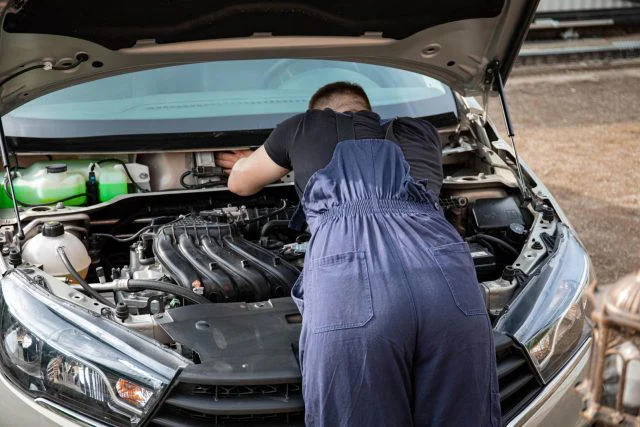
The performance of fixed operations, namely service and parts departments, are another reason why dealership profitability remains high. Fixed operations offers dealers the predictability and repetitive revenue that does not correlate with sales cycle ups and downs. Over the past few quarters, the department has continued to post increases in gross profits which in return has driven overall earnings, and Finance and Insurance products continue to set records which add another profit layer for many dealers.
Revenue Stability Factors:
The focus on less volatile revenue generation indicates a maturing dealership business. Building consistent revenue generating, Fixed operations support is an effective dealership business strategy to better manage fluctuating market conditions and enhance value over time. Buyers are taking note of these less volatile revenues and, as a result, dealerships with well developed Fixed Operations departments are prime targets for acquisition today.

Although the market for dealers remains good as a whole, some are struggling to capitalize fully on what’s happening. For the best franchises the ones that demonstrate profitability, effective inventory control and are positioned for growth a substantial value advantage has been created versus their weaker counterparts.
Market Selectivity Trends:
This widening gulf has brought into sharper focus the critical need for operational excellence in the current market. Dealerships have been forced to prove their consistent capability and effective strategizing to draw investment. Investors are no longer interested in gambling on those under resourced and ill suited dealership. It seems this trend would continue and enhance, thus expanding the gulf even wider between the haves and have nots of the auto franchise sector.

Brands are a major factor in dealer values and a strong or weakened brand leads to both buyer desirability or the opposite. But in this current market several are gaining traction, supported by an optimistic dealer view and an uptick in overall vehicle sales. Mercedes-Benz has been one of the success stories, due in part to an overhaul by the brand to increase focus on the profitable part of the brand. In addition, there are several brands, including Buick GMC, Kia, seeing stronger consumer interest based on good products and models.
Brand Momentum Insights:
Overall, these dynamics underscore the importance of brand reputation for the success of dealerships. Dealership buyers are more willing to take a risk on brands with significant market share and those showing positive market share growth patterns, potentially increasing opportunity for some franchises and narrowing options for others. A dealership needs to align with a manufacturer capable of sustained performance with changing dynamics to be able to stay competitive.

Future trends impacting the dealership market are generally related to technology adoption, geography and deal structures. The market is also seeing early impact from new technologies, like the use of AI, on both efficiency and future profit potential.
Geographic hubs of consolidation are shifting the southern part of the country for instance and deals are getting more complex, impacting how businesses in the auto space trade hands today.
Future Market Drivers:
How the industry will cope is the big question whether it will be more or less consolidation and companies which innovate to grow more in more sophisticated market will lead to continued rapid transformation of industry in general from one of least to most dynamically competitive industry in auto retail space for future is to be believed.
Kerrigan Advisors is the leading sell-side advisor and thought partner to auto dealers nationwide. Since its founding in 2014, the firm has led the industry with the sale of over 450 franchises generating more than $11 billion in client proceeds, including three of the largest transactions in auto retail history – the sale of Jim Koons Automotive Companies to Asbury Automotive Group, Leith Automotive to Holman, and Hennessy Automotive Companies to Group 1 Automotive (planned and expected to close in Q4 2026). The firm advises the industry’s leading dealership groups, enhancing value through the lifecycle of growing, operating and, when the time is right, selling their businesses. Led by a team of veteran industry experts with backgrounds in investment banking, private equity, accounting, finance and real estate, Kerrigan Advisors is the only firm in auto retail exclusively dedicated to sell-side advisory, providing its clients with the assurance of a conflict-free approach.
Kerrigan Advisors monitors conditions in the buy/sell market and publishes an in-depth analysis each quarter in The Blue Sky Report®, which includes Kerrigan Advisors’ signature blue sky charts, multiples and analysis for each franchise in the luxury and non-luxury segments. To download a preview of the report, click here. The firm also releases monthly The Kerrigan Index™ composed of the seven publicly traded auto retail companies with operations focused on the US market. The Kerrigan Auto Retail Index is designed to track dealership valuation trends, while also providing key insights into factors influencing auto retail. To read the 2025 Kerrigan Dealer Survey, click here. To read the 2026 Kerrigan OEM Survey, click here. Kerrigan Advisors is also the co-author of NADA’s Guide to Buying and Selling a Dealership. Additionally, Kerrigan Advisors publishes a podcast, Beyond Blue Sky – A Kerrigan Conversation, where Kerrigan Advisors’ clients and industry leaders share the mindset, strategy and personal stories behind a once-in-a-generation transaction.
Contact us to learn more about Kerrigan Advisors’ sell-side services.
All of our conversations are 100% confidential.


